[Content warning: this post mentions suicide.]
Hey, friends. It’s been a while.
Today marks the one-year anniversary of the day my fiancé John and I adopted our cat, Harvey. In honor of Harvey’s first “gotcha day,” I’d like to reflect on some of the lessons he has taught me over the past year.
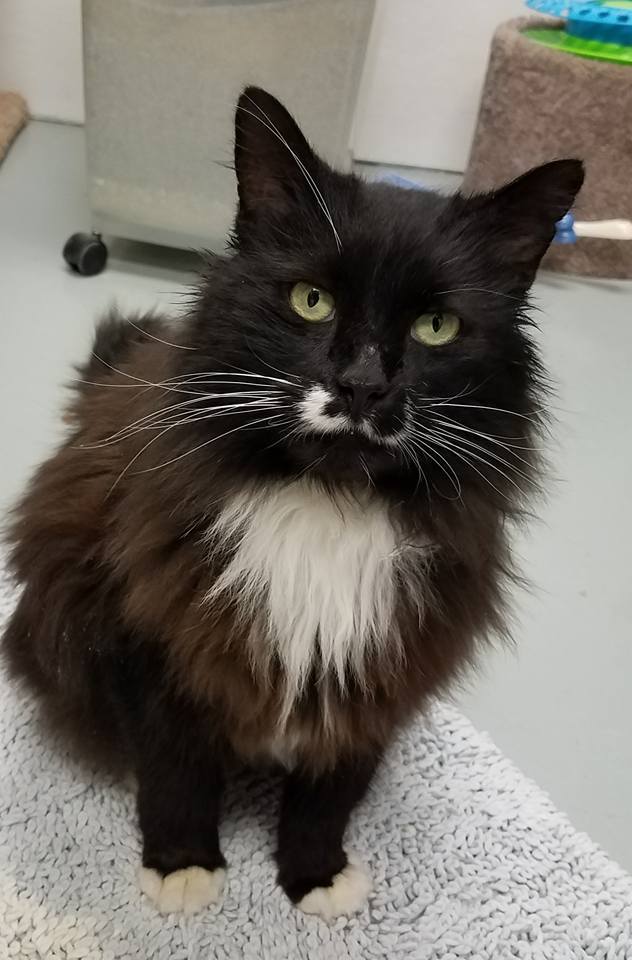
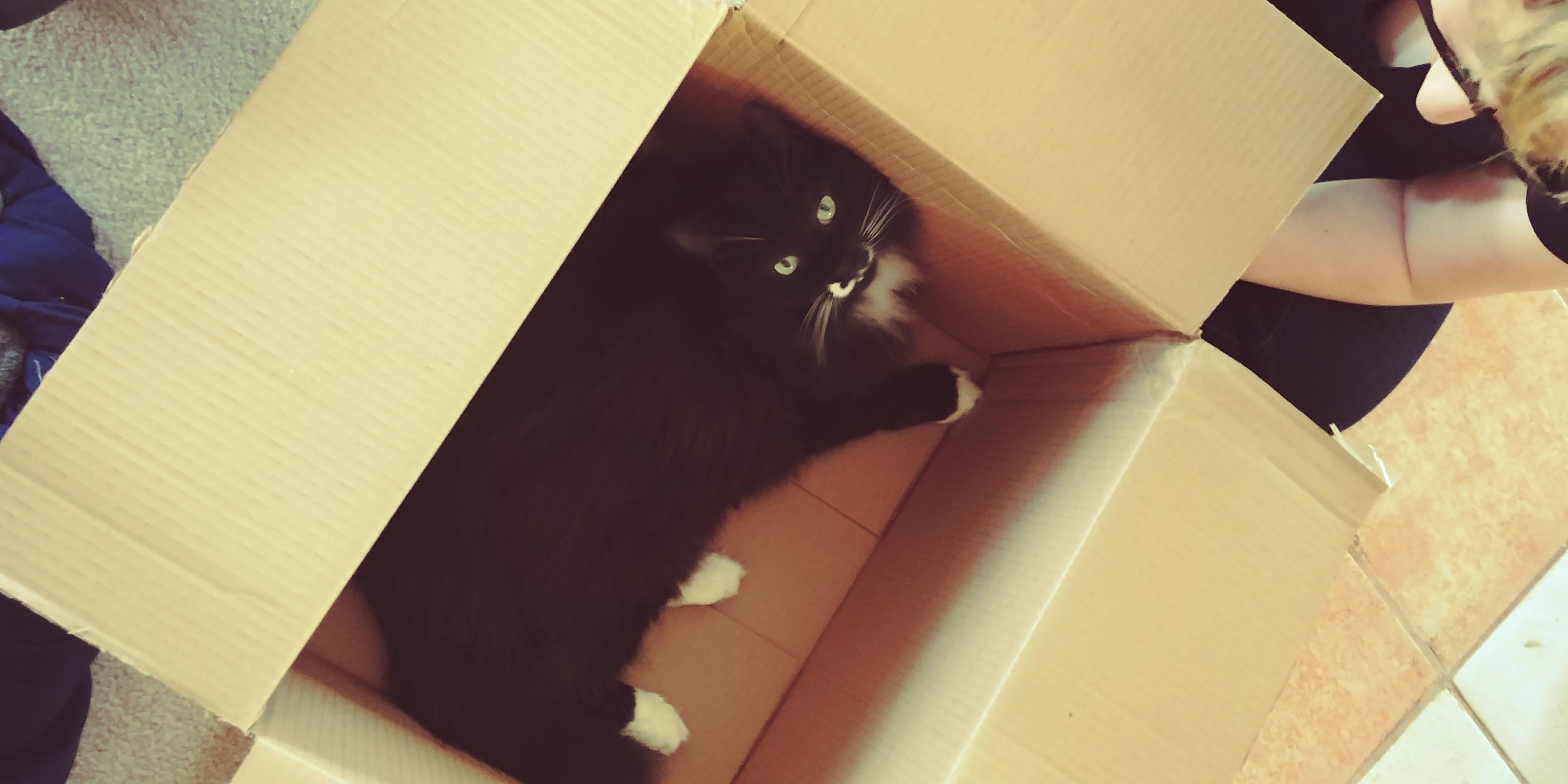
Harvey is a senior tuxedo cat with long fur and a stylish mustache. He prioritizes food over everything else, but he also loves to be social and hang out in the same room as you. He likes playing with string toys, balls, and whatever’s moving. Harvey doesn’t hold grudges, and is one of the most carefree cats I’ve ever met. I am forever heartbroken by the fact that he is not a lap cat, but he’s smart and funny and John and I love him very much.
When we first adopted Harvey from Westfield Animal Shelter last year, he was called Tiny Dancer, named after the Elton John song by the shelter’s animal control officers. He’d come in to the shelter as a stray, but he’d had a family—for reasons we don’t know, and probably will never know, his former family got in touch with the shelter and didn’t want him back. With how much love he’s brought me and John, I can’t comprehend why his former family would choose not to keep him. I know that people surrender their cats for lots of reasons, but he wasn’t surrendered—he was a stray, and had been wandering through farmland and woods in Southampton on his own for at least a couple of months.
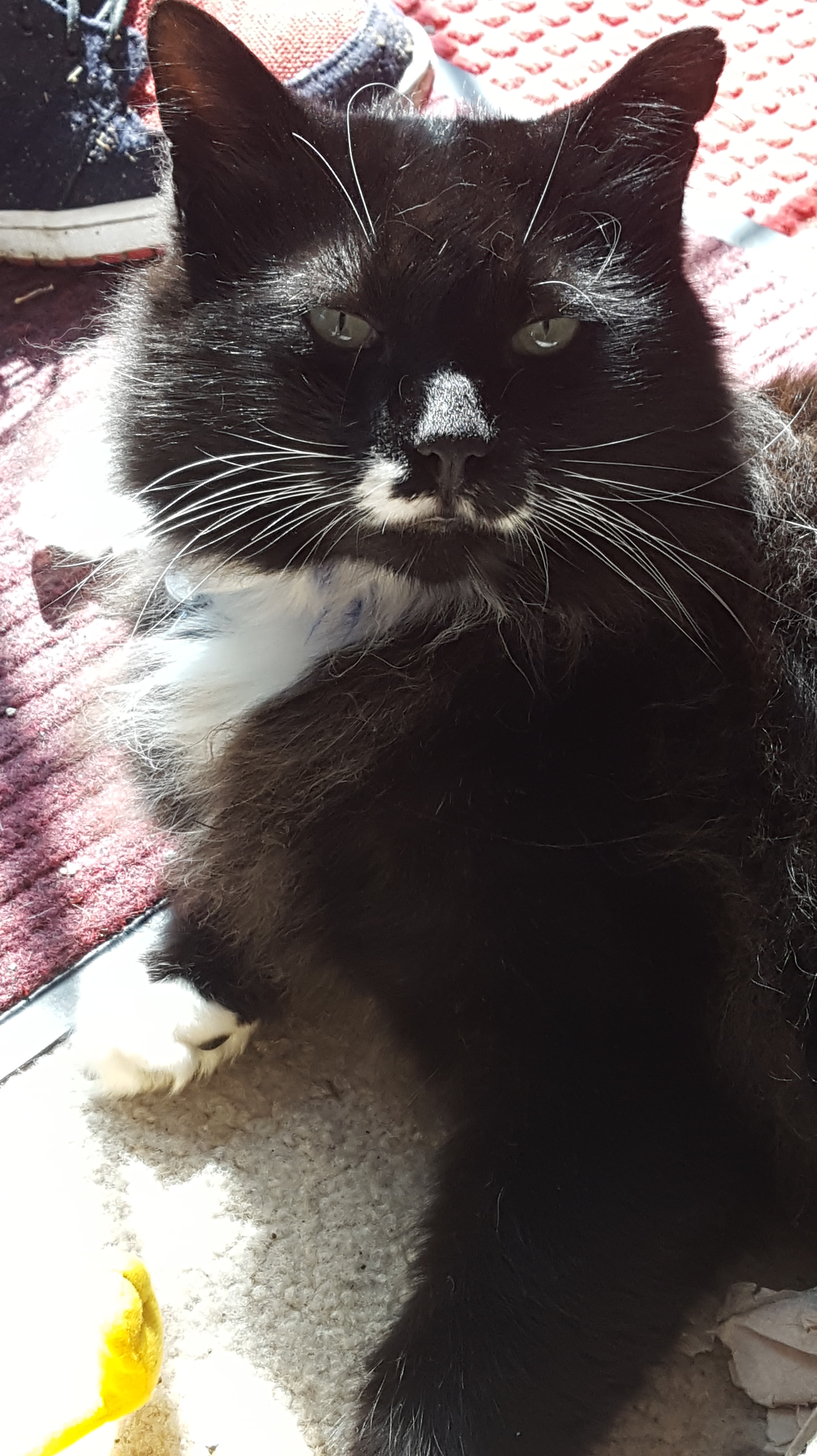
The shelter couldn’t tell us much about his past—I don’t know if that’s because they were bound by confidentiality laws, or if the previous owners just didn’t offer any information. Harvey’s age was estimated to be 8 or 9 years old, but his health paperwork had multiple dates of birth listed. Our vet said that he could be anywhere between 5 and 12 years old. He plays like he isn’t a senior cat, though. I keep wondering what his zodiac sign is.
I’ve had trouble coming to terms with the fact that I don’t know much about Harvey’s past, even though I know it doesn’t really matter in the long-term. John and I have speculated multiple theories based on Harvey’s personality, behavior, and habits. I’ve gone on many an internet search trying to find clues to who his previous owners might’ve been, or to find pictures of tuxedo cats with his signature mustache shape, but I always come up short. I would love to see pictures of him as a kitten, find out how he got the tiny scar on his nose, or even just learn his original name.
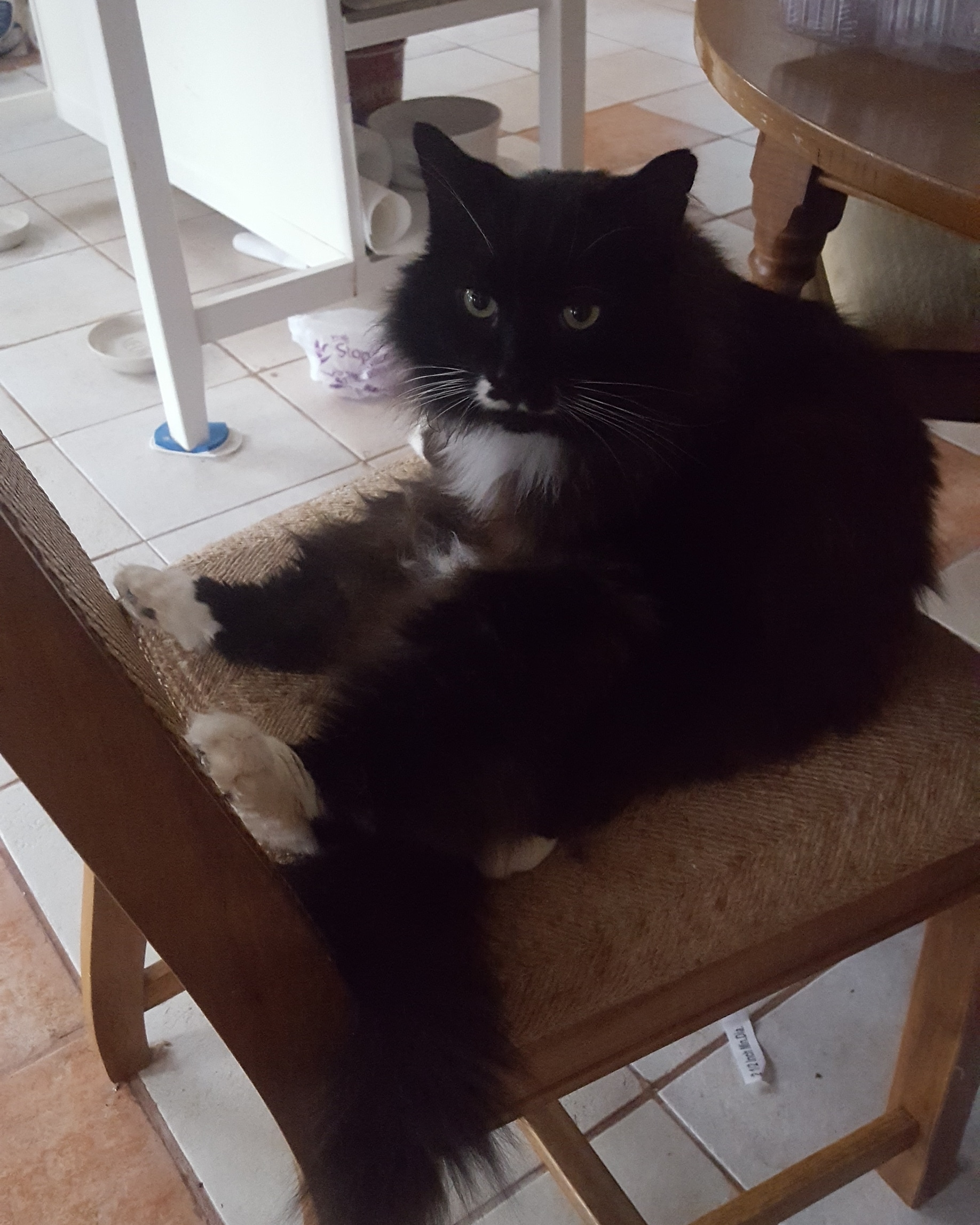
My favorite theory of Harvey’s past is that he was raised by an elderly woman after her adult children moved out, and she spoiled him to bits. Maybe she was wealthy—I imagine them in a big, Victorian-style house with antique furniture. I feel like she called him Sylvester. When she died, either her children were unable to take responsibility for her cat, or he escaped in the aftermath of the funeral/wake and figuring out what to do with her estate. Harvey isn’t the most affectionate cat (unless he wants food), but he’s so relaxed and comforting and interested in refrigerators that I don’t believe he was mistreated. But that makes his previous owners’ attitude toward leaving him at the shelter even more puzzling to me.
My zodiac sign is Gemini, which is often famous for having an insatiable thirst for information. I’m definitely guilty of this—it’s why I’m usually so good at digging things up online. I have a deep desire to know things and collect information. Of course, I also have an anxiety disorder, which often makes me overthink others’ words and actions. It’s part of the way that I process the world and the people around me, but all too often, it causes me to create a narrative based on my interpretations or assumptions instead of the actual truth (which I cannot see due to my anxiety).
People create narratives all the time to explain or rationalize our thoughts, feelings, and reactions to outside stimuli. I’ve done it and I’ve known a whole lot of people who do it, for various reasons. Creating a narrative can sometimes be malicious in nature, like intentionally lying to someone, but I don’t think most concocted narratives are created out of malice. Creating narratives is common for people with anxiety disorders because our brains rapid-fire our fight-or-flight instinct 24/7, and we’re grasping for some sort of explanation. It’s also a way for people to grapple with the unknown. Ruminating on Harvey’s life before we adopted him isn’t my first rodeo—I’ve done this many times over lost friendships, failed relationships, coworkers, and even strangers. I need to know what happened, and why things happened the way that they did. Maybe it’s a way for me to find peace, or at least an attempt at that, anyway.
On the same day that we brought Harvey home, an old friend of mine died by suicide. Because we were so busy preparing for Harvey, I didn’t learn about my friend’s death until that evening. I was devastated, and I had so many questions: did he leave a note? Who found him? Were they able to get him to a hospital before he died, or was he already dead when they got there? Did he suffer? I spent months trying to fill in the blanks, but truthfully, I will probably never know unless I contact his family about it. But they don’t know me, and I don’t want to intrude on their grieving process. Doing so would be extremely insensitive and selfish of me.
I still ask myself those questions sometimes, and I’m still working through my grief. But today, Harvey’s first “gotcha day,” is also the first anniversary of my friend’s death, and I’ve never thought of it as a coincidence. Having Harvey around as a source of joy made it easier to cope in the aftermath of the news. Harvey and John’s support have helped me immensely over the past year.
Coming to terms with the fact that I’ll probably never be able to learn much about Harvey’s pre-shelter life, or have answers about my friend’s death, has been difficult. But Harvey has taught me that it’s okay not to know. After all, he’s with me in the present, and John and I are his family. I should be living in the moment and enjoying my time with them while we’re all still here.
Being jointly responsible for a pet has also reminded me that taking care of others is a big part of taking care of myself, especially when it comes to mental health. On days when John or I may be too depressed to get out of bed, Harvey gets us up, because someone’s got to feed him. If we let our apartment get messy, and we don’t have the energy to clean up, it’s not fair to Harvey to just leave the mess. And it’s not fair to us, either. By caring for other people, or pets, or plants, or anything, it reminds us to treat ourselves with the same respect we give to others.
For me, taking care of other people is an instinct, especially when it comes to empathy and emotional support. Sometimes I wonder if this, itself, is a form of self-care. I’ve always been a people-pleaser and try my best to be diplomatic in situations of conflict, because I don’t want to see anyone upset or hurt. But frequently, the compassion I extend to others isn’t something that I offer to myself. I take responsibility for helping others, but not taking care of myself.
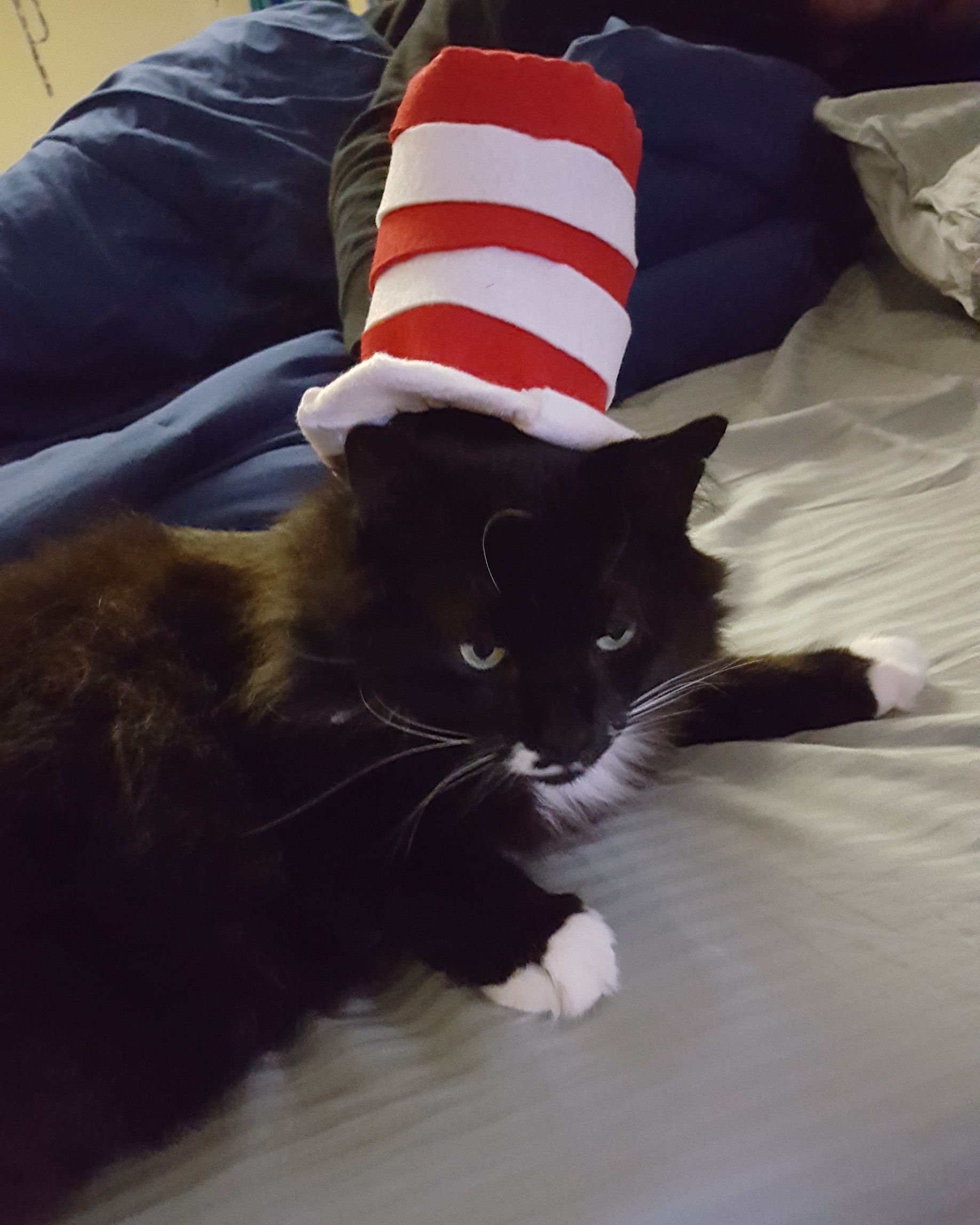
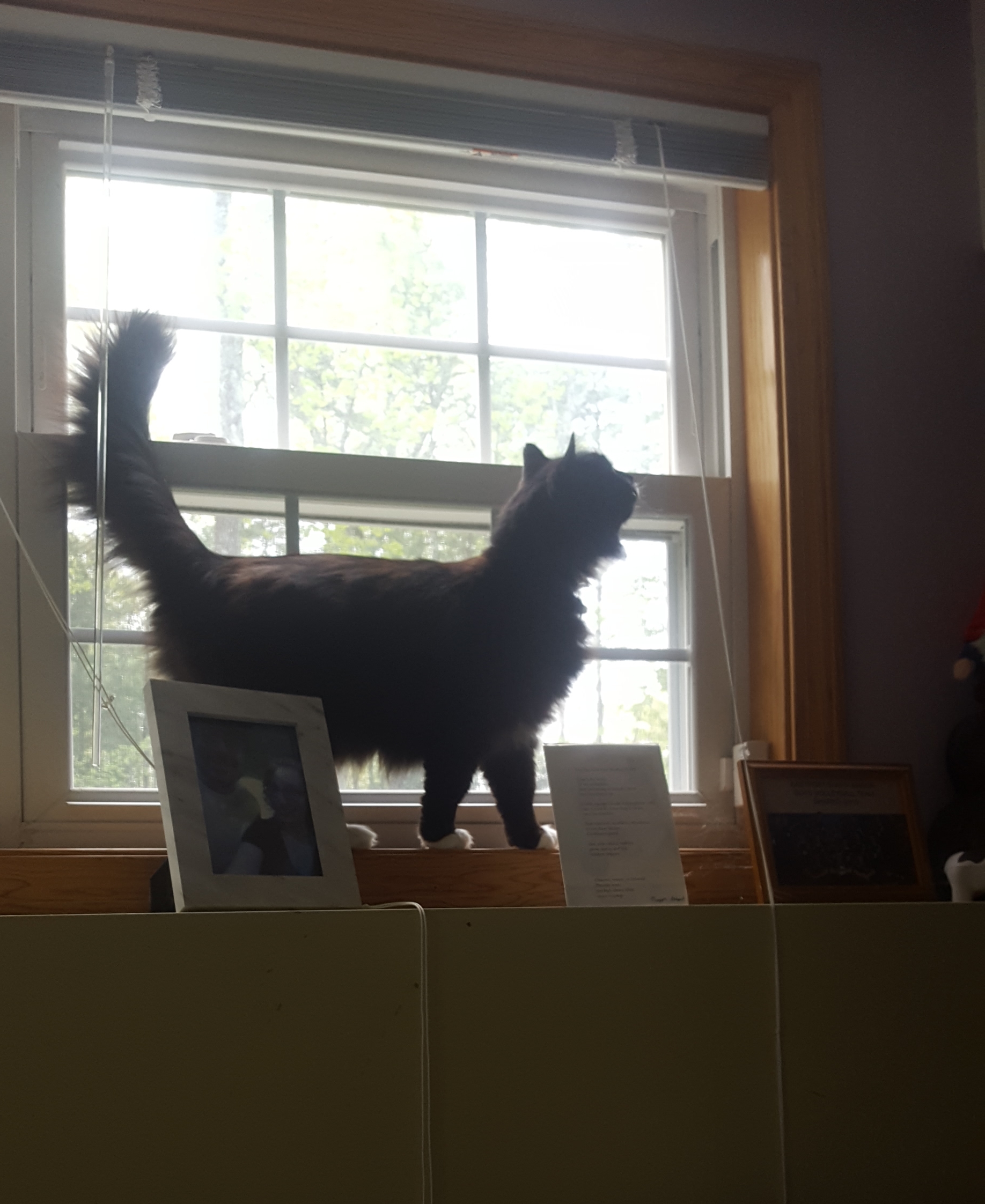
Harvey is a good example for me to follow. When he’s hungry, he eats, and asks for food if he can’t access any himself. When he wants to relax, he lounges or takes a nap. When he wants to play, he plays, or tries to get us to play with him. When he’s not satisfied with the state of his litter box, he says so. When he wants attention, he asks for it. So when I’m hungry, I should eat, instead of putting it off in favor of whatever I was already doing. When I want to relax, I should let myself relax. When I want to do something fun, I should do it. When my living space is messy, I should clean it. When I want attention, or need help, I should ask for it. I owe that to myself.
I know this blog post has been all over the place—maybe it’s just the nature of today, and all of the thoughts and feelings set loose by it. So I just want to end on a positive note. Love each other, love your pets, and take care of yourself. If you’re struggling, try to seek help, or if someone you know might be struggling, reach out to them first. We have to take care of each other, too.
National Suicide Prevention Lifeline: 1-800-273-8255
American Foundation for Suicide Prevention: afsp.org
 Chrissy Montelli
Leave a comment